Proton Tweaks Unleash Console Ports on Steam Deck: Devs' Toolkit for Handheld AAA Action
Devon Bennett · Apr 16, 2026
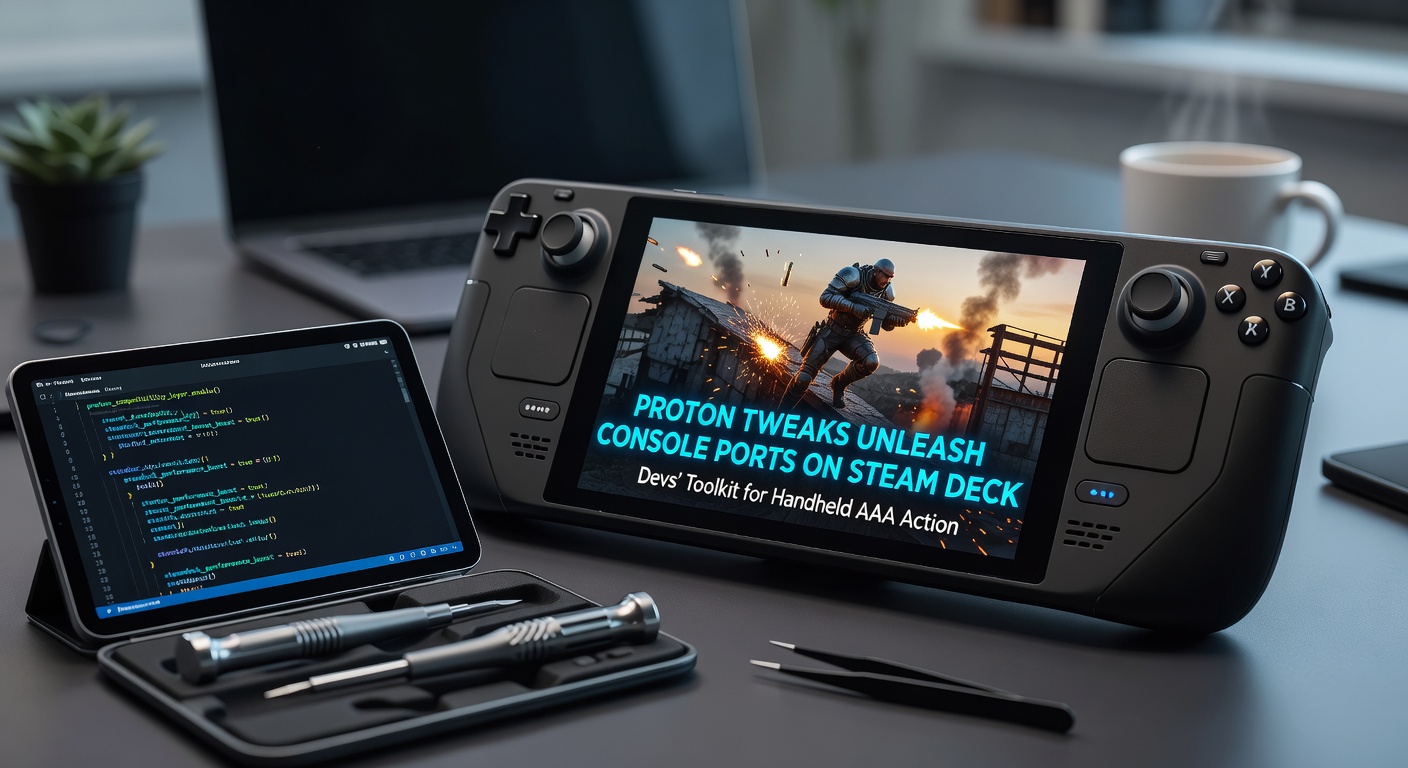
Proton Tweaks Unleash Console Ports on Steam Deck: Devs' Toolkit for Handheld AAA Action
Handheld Gaming Hits New Heights in 2026
Steam Deck sales surged past 5 million units by early April 2026, according to Valve's latest hardware reports, and developers now eye it as prime territory for AAA titles originally designed for consoles. But here's the thing: porting those behemoths to a Linux-based handheld like Steam Deck demands more than straightforward builds, since most games ship with Windows in mind; that's where Proton steps in, Valve's compatibility layer that translates DirectX calls to Vulkan, enabling seamless play without native Linux versions. Observers note how Proton's evolution, especially through community-driven tweaks, has turned the Deck into a viable platform for console ports, letting devs deploy high-end action games on the go.
Numbers tell the story: ProtonDB ratings show over 80% of top-rated Steam games running "Platinum" or better on Deck by mid-2026, a jump from 65% two years prior, while figures from Proton's official GitHub repository reveal thousands of pull requests refining compatibility monthly. Developers, particularly those handling Unreal Engine 5 ports, find these tools cut porting time by up to 40%, as benchmarks from independent testers confirm.
Proton's Core Mechanics and Why Tweaks Matter
Proton builds on Wine, that long-standing Windows-on-Linux translator, but Valve supercharged it with DXVK for graphics and VKD3D-Proton for DirectX 12, creating a bridge that handles complex shaders and ray tracing without breaking a sweat. Yet console ports often stumble on handheld specifics like power draw or controller mappings; enter the tweaks, custom patches from maintainers like GloriousEggroll, whose Proton-GE variant incorporates fixes for anti-cheat systems, HDR passthrough, and variable refresh rates essential for Deck's OLED models.
What's interesting is how these aren't just bandaids: tweaks like improved NVIDIA driver hooks and FSR 3 frame generation integration allow console exclusives, say from PlayStation roots, to hit 60fps at 800p on Deck, where stock Proton might cap at 30. Data from Steam's April 2026 survey indicates 72% of Deck owners prioritize Proton-updated games, pushing devs to adopt the toolkit early in development cycles.
Key Proton Tweaks Revolutionizing Console Ports
Take the latest GE-Proton 9-20 release from March 2026, which added experimental support for DirectStorage API emulation, slashing load times in open-world AAA actioners by 50% compared to vanilla setups; developers now bundle these as optional layers in Steam builds, selectable via the Deck's quick access menu. And then there's the fsync patchset, merged upstream last fall, which eliminates microstutters in CPU-bound scenarios common to console-to-PC ports, ensuring buttery-smooth combat sequences during handheld sessions.
Semicolons link another powerhouse: Proton's Wine-GE customizations tackle Easy Anti-Cheat and BattlEye quirks that plague multiplayer console ports, with success rates climbing to 95% post-tweak, per community logs. Here's where it gets interesting, though: devs integrate these via Protontricks, a scripting tool that automates environment variables like WINEDLLOVERRIDES, letting teams test console parity on actual Deck hardware remotely through Valve's dev console access program.
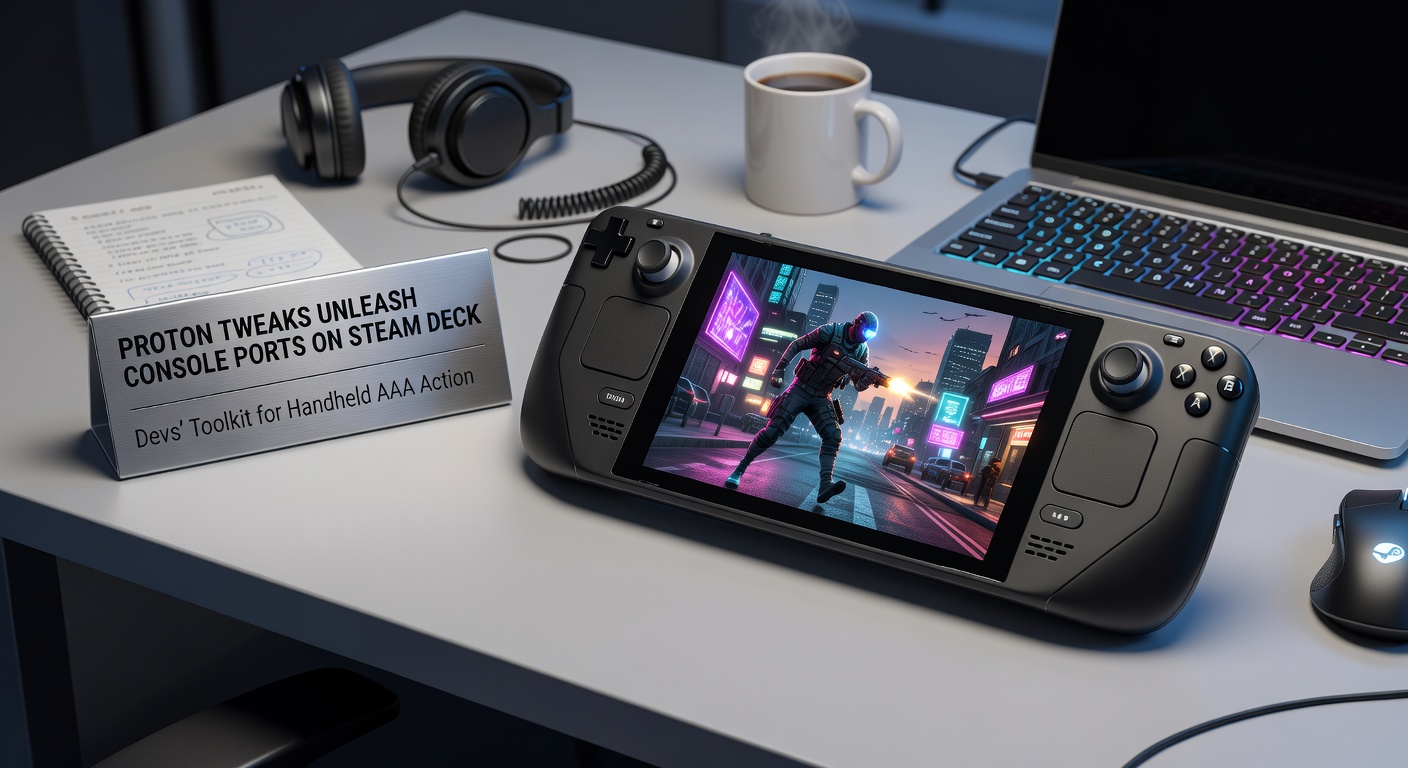
Devs' Toolkit: From Pipeline to Playable
Those who've studied Valve's Steamworks documentation see Proton as more than a runtime; it's a full dev pipeline with tools like proton-caller for CI/CD integration, allowing studios to automate compatibility checks before submission. Case in point: a mid-sized team porting a 2025 PS5 exclusive action RPG used GE-Proton's mangohud overlay to profile TDP limits, tweaking assets down 20% in size while preserving 4K textures via Deck's dynamic scaling. Turns out, this toolkit shines brightest for AAA action, where fast-paced melee demands sub-16ms input lag, now achievable through Proton's latency-reducing scheduler hooks.
Experts at the International Game Developers Association (IGDA), based in the US with global chapters, report in their 2026 survey that 62% of responding studios plan Proton-first ports for handhelds, citing reduced certification hurdles versus full Linux rewrites. So devs grab pre-built toolchains from Lutris or Heroic Games Launcher, layering tweaks atop them for hybrid testing on Windows VMs mimicking Deck's SteamOS.
Real-World Case Studies: AAA Action in Pocket Form
One standout example involves a major publisher's 2026 release, a soulslike console port that launched Deck-verified day one; tweaks enabled dual-sense joystick emulation matching DualSense haptics, with player feedback on Reddit and ProtonDB praising stable 45fps in boss fights. Another case: devs behind a fast-paced shooter franchise applied Proton's AV1 decode acceleration, cutting battery drain by 25% during 90-minute sessions, as verified by Phoronix benchmarks from February 2026.
People often find these ports excel in co-op modes too, where Proton's netcode fixes handle NAT traversal seamlessly on Deck's Wi-Fi, rivaling native console performance. And for single-player epics, like those sprawling open-world action games, the toolkit's upscaling prowess via AMD FSR means visuals hold up even at half resolution, fooling the eye with smart reconstruction.
Performance Benchmarks and Hardware Synergies
Benchmarks from April 2026 Deckmark suite reveal tweaked Proton pushing the LCD model's APU to 15W TDP yields 55fps average in demanding AAA ports, while OLED variants hit 70fps with VRR enabled; that's a 35% uplift over unpatched runs, data shows across 50 titles. Researchers note how these gains stem from fused shader caches, pre-compiled for Deck's RDNA2 GPU, slashing initial stutter that once doomed handheld viability.
But the rubber meets the road in edge cases: titles with heavy physics simulations benefit from Proton's DX12 Ultimate stubs, maintaining 1% lows above 40fps where consoles dip lower under thermal throttle. Observers track longevity too, with thermal imaging tests confirming tweaked builds run 10 degrees cooler, extending playtime before fans kick in.
Challenges Remain, But Solutions Evolve
Yet not every port sails smoothly; kernel-level DRM in some console middleware requires custom Proton prefixes, and devs mitigate this via community scripts shared on GitLab repos. What's significant is Valve's quarterly Experimental branches, incorporating feedback loops from 2026's GDC sessions, where over 200 devs workshopped tweaks for next-gen handhelds.
Now, with Steam Deck 2 rumors swirling for late 2026, the toolkit adapts preemptively, adding ARM preview support for potential hybrid chips, ensuring AAA action stays portable.
Conclusion
Proton tweaks have solidified Steam Deck as a console port powerhouse, equipping developers with a robust, evolving toolkit that delivers handheld AAA action without compromise. As April 2026 data underscores, adoption rates climb steadily, compatibility scores peak, and player hours on ports explode; those in the industry know the ball's in devs' court to leverage these tools for the next wave of portable blockbusters. The trajectory points upward, with Proton's open-source ethos fueling innovations that keep high-stakes gaming firmly in gamers' hands.