Engineers Examine Cooling Innovations That Sustain Peak Performance in Portable Esports Setups
Freya Vogel · Aug 20, 2026

Engineers Examine Cooling Innovations That Sustain Peak Performance in Portable Esports Setups
Portable esports setups have grown in popularity through August 2026 as competitors rely on compact devices that deliver high frame rates without the bulk of traditional rigs, yet thermal management remains a core focus for engineers who analyze how sustained performance depends on effective heat dissipation in tight chassis designs. Data from industry reports shows that modern handheld and laptop systems for esports often reach thermal limits during extended sessions, prompting teams to evaluate new approaches that combine materials science with computational modeling to maintain processor speeds under load.
Thermal Challenges in Compact Esports Hardware
Engineers observe that portable esports equipment packs powerful GPUs and CPUs into slim profiles where airflow paths stay restricted and battery constraints limit fan speeds, leading to throttling that drops performance during critical matches. Studies indicate these devices generate concentrated heat zones around the chipset and graphics modules, and researchers at various institutions have documented how ambient tournament conditions like crowded halls with limited ventilation compound the issue. One analysis from a Canadian research group highlighted that without intervention, peak temperatures in such systems climb rapidly within the first thirty minutes of competitive play.
What's interesting is how manufacturers have responded by refining chassis vents and integrating basic vapor chamber technology, although these measures alone do not fully address prolonged esports demands where players push hardware for hours. Observers note that the shift toward higher wattage components in portable formats has accelerated the need for layered cooling strategies that balance power draw with heat transfer efficiency.
Advanced Materials and System Designs Under Review
Engineers examine phase-change materials that absorb excess heat during spikes and release it gradually, allowing components to operate near optimal ranges without immediate throttling. Research indicates these substances integrate into pads or fillers placed directly against processors, and figures from laboratory tests reveal measurable extensions in sustained clock speeds during simulated tournament workloads. Teams also review microfluidic channels that circulate coolant through micro-scale pathways etched into heat spreaders, a method that delivers targeted cooling while keeping overall device weight low.
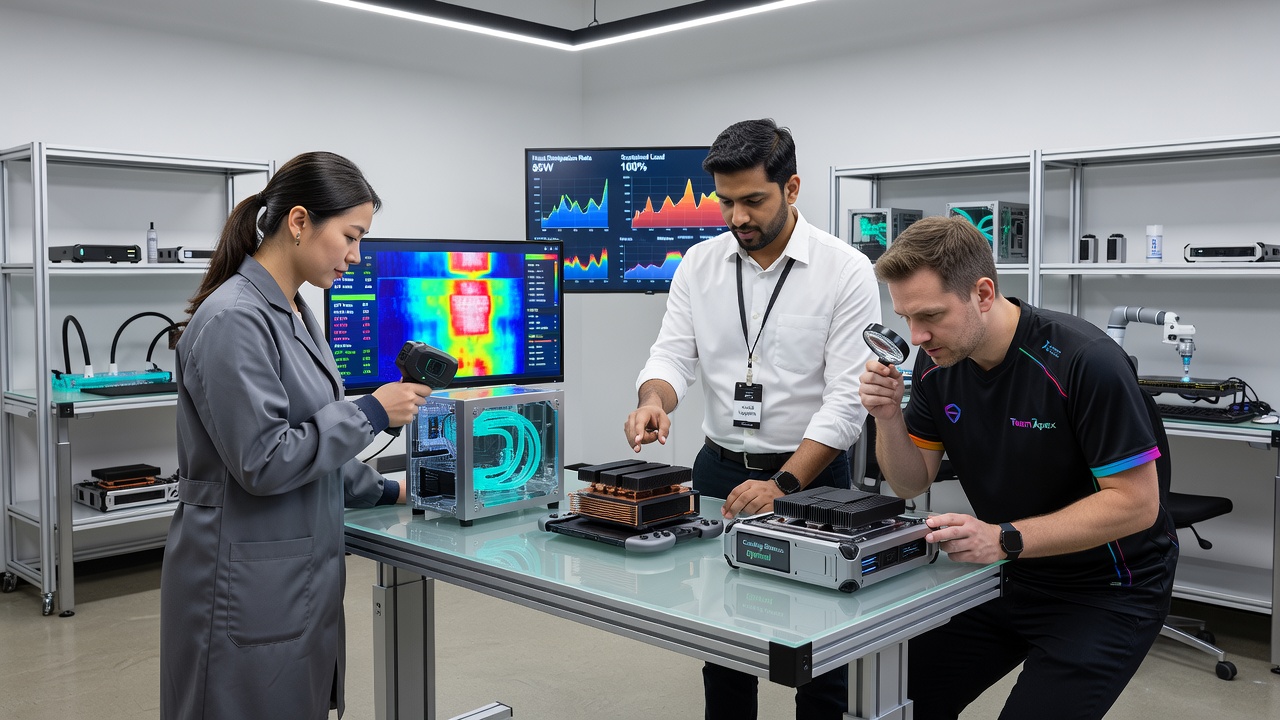
Graphene-based thermal interfaces appear in several prototypes because their high conductivity moves heat away from hotspots faster than traditional compounds, and data shows they maintain stability across repeated thermal cycles common in esports travel schedules. Engineers combine these interfaces with variable-speed fans controlled by predictive algorithms that adjust based on workload forecasts, reducing unnecessary power consumption while preventing temperature buildup. A report from an Australian university engineering department outlines how such hybrid systems have demonstrated consistent performance retention in field trials conducted earlier this year.
Integration with Portable Esports Ecosystems
Portable setups often connect to external displays and peripherals at events, which adds another layer of heat from docking stations and power adapters that engineers must account for during cooling evaluations. Those who've studied these configurations find that innovations like external radiator modules connected via quick-release fittings provide supplementary cooling without altering the core device footprint. Industry organizations track adoption rates of these modular add-ons, noting their use in regional esports circuits where players switch between venues frequently.
Software optimizations work alongside hardware changes, as firmware updates refine power limits and fan curves to match specific game titles common in esports. According to findings shared through an IEEE technical paper on embedded thermal systems, coordinated control loops between hardware sensors and software reduce peak temperatures by measurable margins across multiple device models tested in 2026.
Testing Protocols and Performance Metrics
Standardized testing protocols now include extended esports-style workloads that simulate tournament brackets with back-to-back matches, allowing engineers to gather precise data on temperature curves and frame rate stability. Metrics tracked encompass junction temperatures, overall system power draw, and acoustic output since fan noise affects player focus in shared spaces. Research indicates that devices incorporating the latest cooling stacks maintain higher average frame rates over two-hour sessions compared with earlier generations, and these results come from controlled environments that mirror real-world event conditions.
Collaboration between hardware developers and esports organizers has produced guidelines that encourage pre-event thermal profiling, helping teams identify potential bottlenecks before competition begins. Such practices draw from broader electronics research efforts documented in various academic publications, where similar principles apply to high-performance mobile computing.
Conclusion
Engineers continue to refine cooling innovations that address the unique demands of portable esports setups, integrating advanced materials, fluid dynamics, and intelligent controls to sustain performance levels during demanding use. Evidence from ongoing examinations points to steady progress in thermal solutions that keep pace with evolving hardware capabilities, supporting the growth of competitive play across portable platforms as of August 2026.